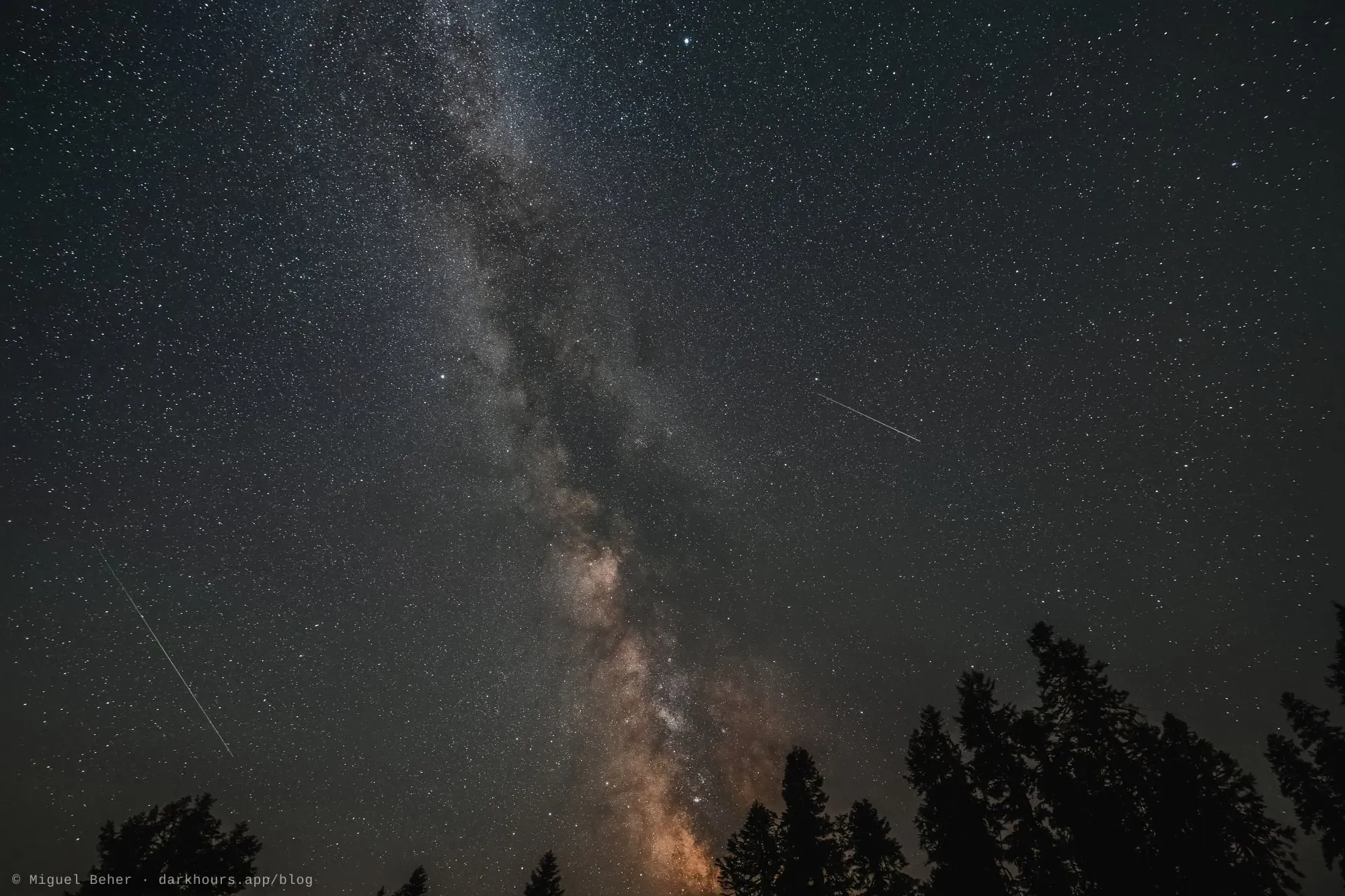
The Perseids meteor shower comes every summer and peaks in August. It’s one of the biggest meteor showers in the Northern Hemisphere, delivering up to 100 meteors an hour. In 2026 its peak on August 12–13 coincided with a new moon, which made for ideal conditions. While good lunar conditions during the peak happen about every four years, a new moon only happens once every 19 years. This year was special, and I wanted to get out to see it.
Choosing Where to Go
I started planning where to see the shower in the spring of 2026. The ideal place would give me access to Bortle class 1 skies, be within a 3-hour drive of an airport, and have accommodations. As long as nighttime temperatures were tolerable, summer heat wasn’t an issue, but rain and clouds would be deal-breakers. The desert town of Tonopah, Nevada was a strong contender. Ignoring that the only two places to stay are either a clown motel or a place haunted by a murder victim, the town was a good fit. It was within driving distance of Las Vegas, had a dedicated stargazing park, and had low average rainfall in August, which usually means clear skies. I kept some favorites in my back pocket, like Sedona, Knolls, and Joshua Tree.
Fast forward to August… The weather had other plans. Most of the country, and every location I had in mind, had clouds or rain in the forecast. Making matters worse, many dry areas were dealing with wildfires. No clown motel summer for me. Two days before the trip, I had no idea where to go.
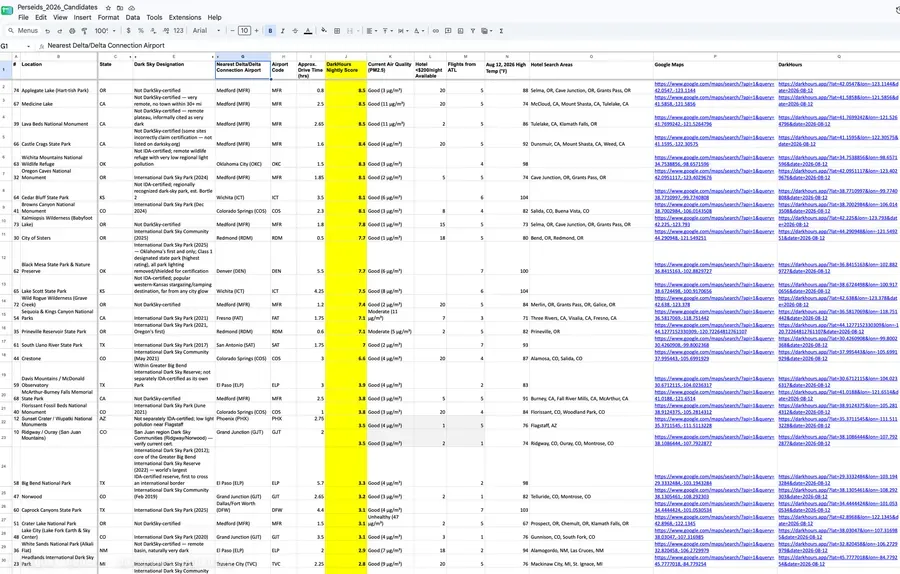
So, I did what any sane person would do in this situation: I drew up a spreadsheet, hooked up my DarkHours engine to a script to feed it scores, Bortle, and weather information, got a Google Flights API key, and cobbled together a list of about 70 low-Bortle locations. I set it up so I could update the sheet with the latest weather data on demand. I decided to choose the highest-scoring candidate.
The Spreadsheet Hath Spoken
While I was pulling for a desert location, the highest-scoring location was Applegate Lake in southwestern Oregon. It’s just north of the California state line. The nearest city with an airport was Medford, Oregon. It was quantitatively the right choice.
At 10:00 PM on the 11th of August, the night before the trip, the plan was made: leave Atlanta in the morning, land in Medford at 4 PM via Seattle, spend two nights under some of Oregon’s darkest skies watching the meteor shower, and head back home Saturday. The trip into Medford went smoothly, and we landed on time.
It wasn’t all perfect. Oregon and Washington were battling wildfires. As we landed in Medford, the air had a thick haze, and it smelled like smoke. As long as the winds cooperated, areas south and east of Medford would stay clear. The forecast just had to hold. After getting our car, we picked up food and drinks for our stay on the way to the Airbnb. The rental was a little cabin on the Rogue River in Grants Pass.
First Night at Applegate Lake, Oregon
By sunset we were pulling up to the lake for our first night of stargazing. One thing I learned about Oregon very quickly is that nearly every park is day-use only, open from sunrise to sunset. Most places to set up around the lake were either gated or had day-use signs up. After a bit of driving, we pulled off to the side of the road over the lake’s dam. It was out of the way of cars and had a good southern view, level ground for the tripods, and no “day use only” signs.
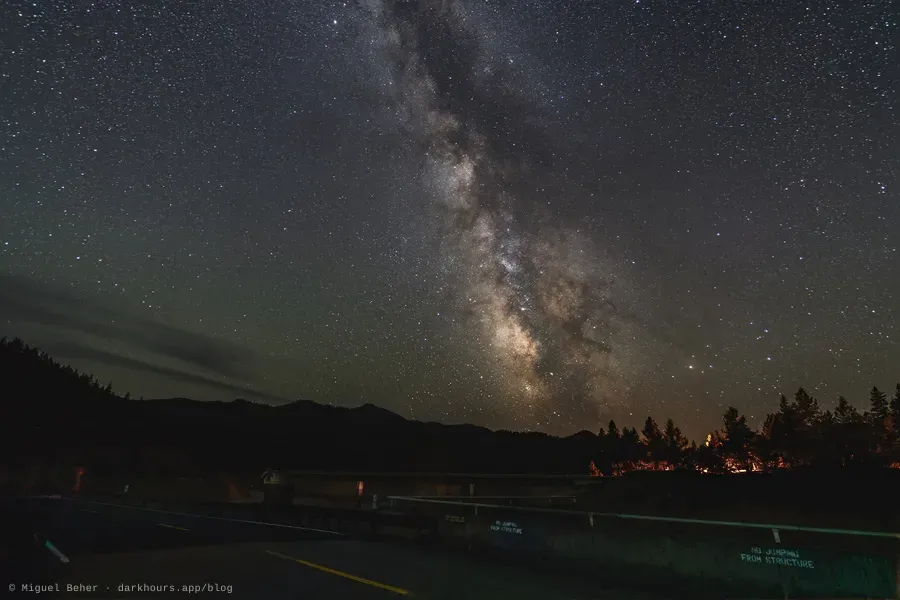
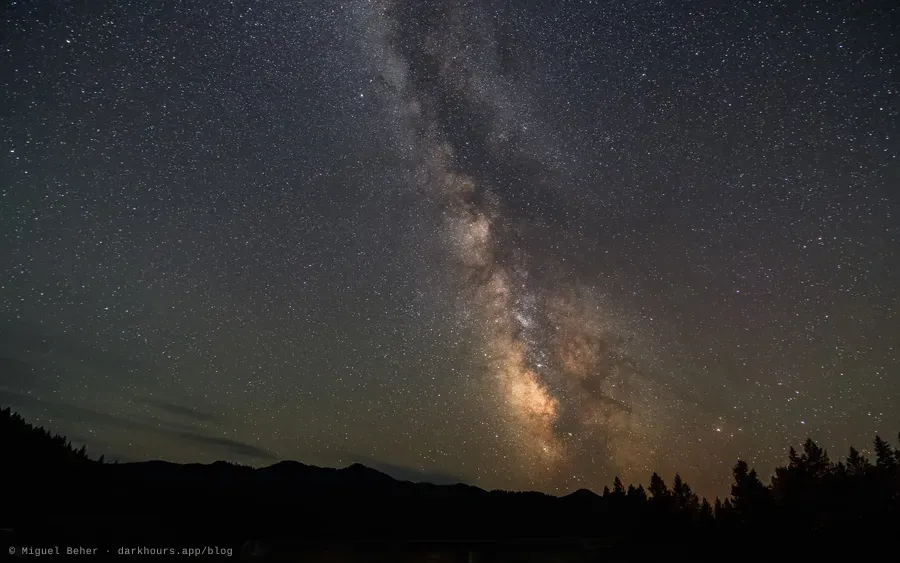
The sky at Applegate Lake was perfect. The Milky Way was pronounced and visible to the naked eye. We watched the stars and enjoyed the near-peak meteor shower. As promised, there were fireballs, with visible smoke trails behind them. We called them “smokers.” I somehow failed to capture any on camera that night. The good times lasted several hours until we started to get buzzed by bats at an uncomfortable rate. On the drive back from Bat Lake, we also spotted a coyote, two dogs on the loose, several deer, and a black bear, all walking on the side of the road. Nature was enjoying the night too.
Crater Lake, and Oregon’s Day-Use Park Problem
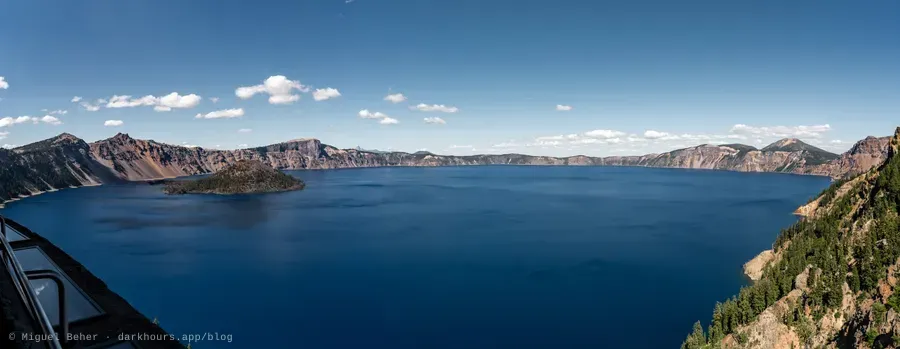
The next day, we drove to Crater Lake. The lake inside a massive open volcano is impressive, and it would have been the perfect place to see the peak of the shower, but there were fires nearby. The air was clear, but any wind shifts would have made it risky. Also, our cabin was a two-hour drive away, much of it through forests. So, we enjoyed the daytime view and spent the rest of the day looking for a location to take in the main event that evening.
This is where Oregon’s parks get a little weird. Every single park we stopped at was day-use only. It seems that unless it’s a national park like Crater Lake, there is no nighttime use. Lakes, parks, BLM land: every place we checked was daytime only. It’s not obvious online, either.
Watching the Perseids Peak on Mt. Ashland
A few searches recommended Mt. Ashland, a 7,500 ft peak that’s used as a ski area during the snow season. In August the parking lots were empty, and it’s a well-known spot with the locals for watching the Perseids. It ticked every box: dark skies, easy to get to, clear air, high elevation, and open at night.
We headed over a little after sunset. The drive up the mountain was very dark until we got behind a car about a mile past the entrance. By the next mile we were in a clump of 5 cars. By 9:00 PM there were over 40 cars in the parking lot, and more streaming in every few minutes… for the entire night. Mt. Ashland is evidently very popular for meteor showers. The thing about stargazing is that your eyes need about 20 minutes of darkness to adapt. A flash of light immediately resets your night vision. Car headlights steadily streaming in and out make for bad night vision. So, while we saw a lot of very impressive smokers, we missed the more numerous shooting stars that weren’t as bright.
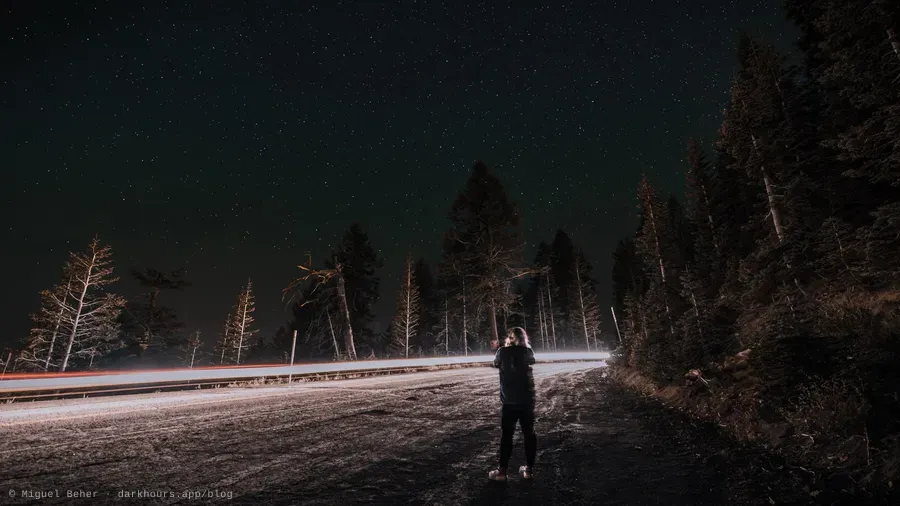
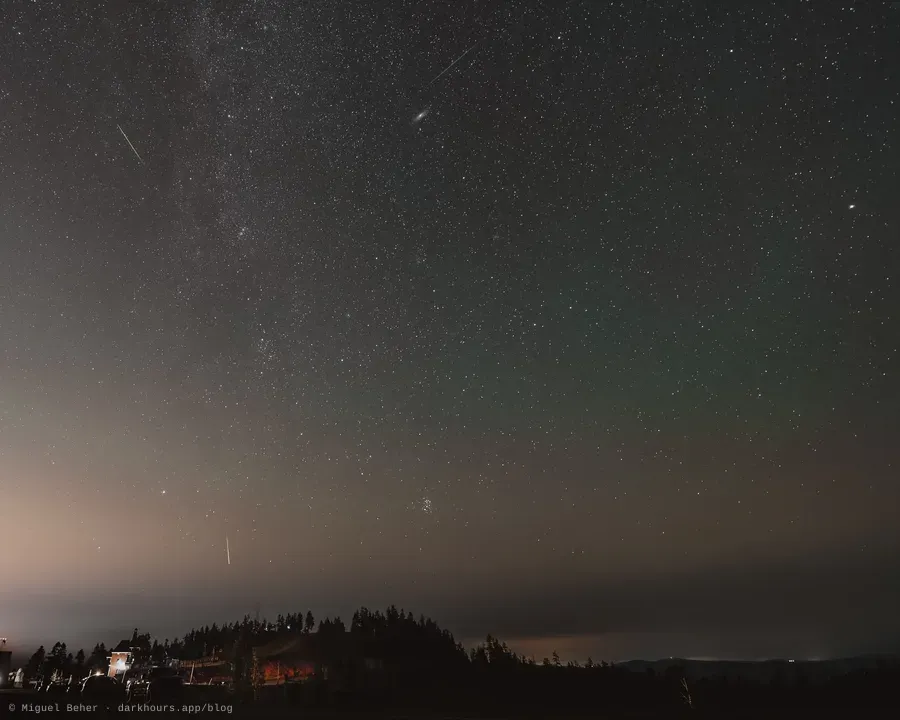
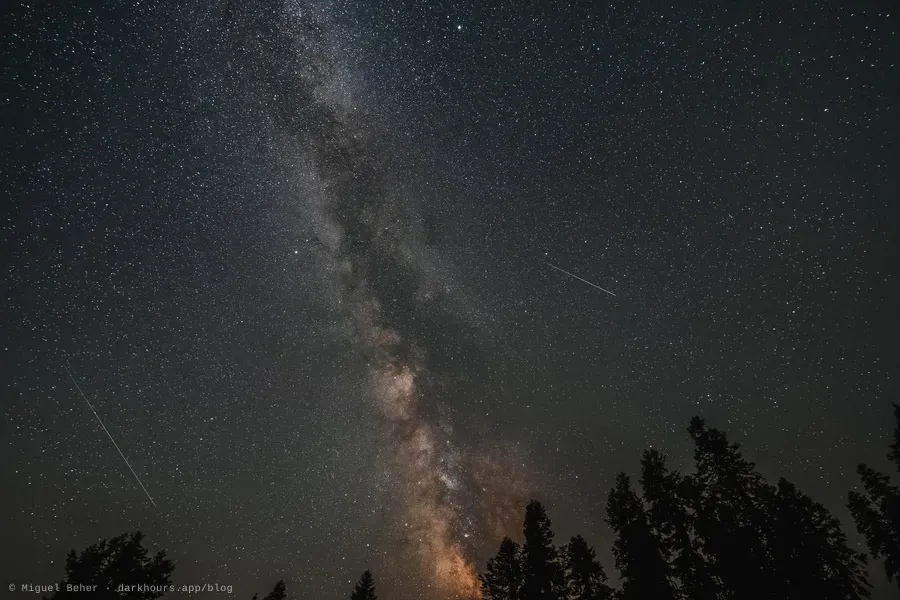
Despite the headlights, we had a lot of fun. They made for interesting pictures. Music was playing, and everyone was enjoying themselves. It wasn’t a total photography loss; I captured several meteors as well. While it didn’t go as planned, we enjoyed the meteor shower at its peak.
The Wildfire
The next day, on Friday afternoon, I noticed haze outside the cabin. I stepped out to take a look and was shocked to see a large plume of smoke nearby, helicopters circling overhead, and fire trucks zooming by. A wildfire had broken out on the hill across the river from our cabin. Ten minutes later, the power went out, and with it water from the well. Things got serious. We decided to get out of the way and spend the last night of our trip in town. We didn’t know the area, and this wasn’t the time to be tourists. Our neighbors were real people who lived there. We later learned that the Fielder Mountain Fire ended up burning 400 acres. Thankfully, no people were injured and no structures were lost.
Was the Trip Worth It?
Absolutely! I hadn’t considered southwestern Oregon, but I trusted my spreadsheet and data. On these trips you run into the unexpected, but you adapt and enjoy the experience for what it is. I wouldn’t have it any other way. On this trip, the moment I remember most was on Mt. Ashland. Around 2:00 AM, as we were all just enjoying being there, I snagged a photo stack that captured the Pleiades, the Triangulum Galaxy, Andromeda, two fireballs, and a faint aurora. The photo was a true gift.